Birmingham Summer HVAC Survival Guide: Prepare Before the Heat Hits
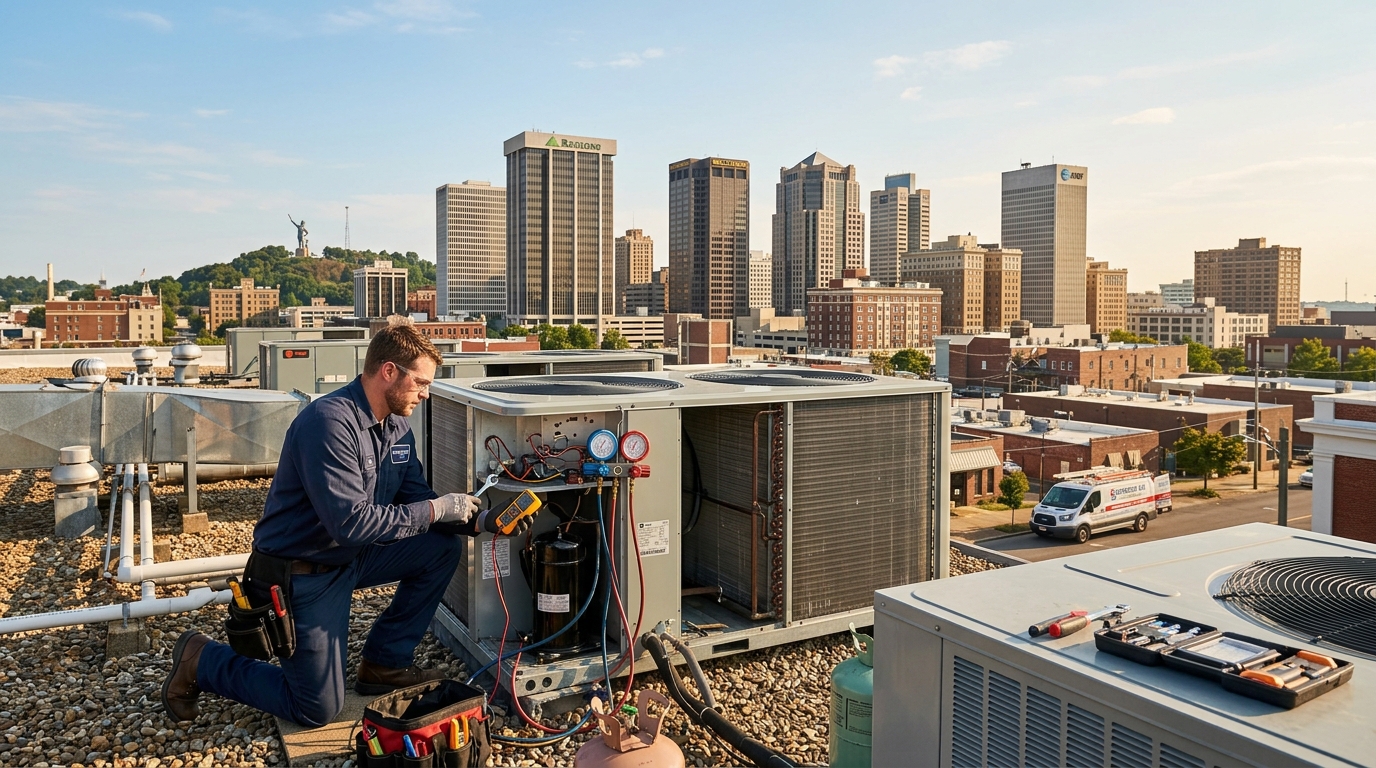
Every year, the pattern repeats across Birmingham. March and April bring mild, pleasant weather, and nobody thinks about their AC. Then the first 90-degree week hits in May, every air conditioner in Jefferson and Shelby County fires up at once, and the phones at every HVAC company in the metro start ringing off the hook. The homeowners who prepared in spring are cool and comfortable. The ones who did not are sweating through a three-day wait for emergency service. This guide gives you a month-by-month plan to make sure you are in the first group.
Quick Answer
March: schedule your tune-up. April: test the system, clean pollen off the outdoor unit. May-September: replace filters monthly, bleach the drain line, keep the outdoor unit clear. Set thermostat to 75-78. Fan on AUTO, not ON. Do this and you'll avoid most emergency calls.
March: Schedule Your Annual Tune-Up Before Everyone Else Does
March is the single best month to schedule AC maintenance in Birmingham. The weather is mild enough that most people are not thinking about their cooling systems yet, which means HVAC companies have open schedules. A professional spring tune-up includes a comprehensive inspection of your entire system. The technician will check all electrical connections and tighten loose terminals that can cause component failure. They will measure refrigerant levels and look for signs of leaks. They will clean the evaporator and condenser coils, which lose efficiency as dirt accumulates. They will test the capacitor, contactor, and other electrical components that are prone to failure in Birmingham's heat. They will verify that the condensate drain line is clear and flowing properly. And they will run the system through a complete cooling cycle to confirm everything operates within manufacturer specifications. This single appointment catches the vast majority of problems that would otherwise become emergency calls in June or July. Think of it as an insurance policy that prevents a much larger emergency bill later — ask any contractor for a written estimate before the visit.
April: Test Your System and Handle the Spring Pollen Assault
April in Birmingham brings two things that directly affect your HVAC system: unpredictable temperature swings and a massive pollen onslaught. Birmingham consistently ranks among the worst cities in America for spring allergies, and all that oak, pine, and grass pollen does not just affect your sinuses. It clogs your air filter at an accelerated rate and coats your outdoor condensing unit in a yellow-green layer that restricts airflow. Start April by running your AC on a warm afternoon to confirm it cools properly. Do not wait for the first truly hot day to discover a problem. If the system runs but does not cool well, or if you hear unusual noises, schedule a service call now while technicians are still available for prompt appointments. Replace your air filter at the beginning of April, even if you just changed it in March. Birmingham's spring pollen season is that intense. Check your outdoor unit and hose off any visible pollen accumulation from the condenser fins. Clear any debris that accumulated around the unit during winter, including fallen branches, leaves, and mulch that may have shifted. Maintain at least two feet of clearance on all sides. This is also a good time to check your thermostat batteries if you have a wireless model, and to review your programmable schedule to make sure it reflects your summer routine.
Key Takeaway
Don't wait for the first 90-degree day to find out your AC doesn't work. Run it during a warm April afternoon. Finding a problem when techs have open schedules beats discovering it during the first heat wave when everyone is booked solid.
May: Birmingham's Transition Month Demands Attention
May is when Birmingham transitions from spring directly into summer, and it happens fast. Temperatures regularly hit the high 80s to low 90s, and the humidity begins its relentless climb toward the oppressive levels that define a Birmingham summer. This is the month when your AC shifts from occasional use to near-continuous operation, and that transition is when many systems reveal problems that went undetected during lighter spring use. Replace your air filter at the beginning of May, starting your monthly replacement cycle that will continue through September. Pour a quarter cup of bleach into your condensate drain line access to prevent algae buildup throughout the coming humid months. This simple preventive step takes two minutes and prevents one of the most common service calls in Birmingham during summer. Set your thermostat to your summer schedule if you have not already. The recommended range for Birmingham homes during summer is 75 to 78 degrees when occupied and 80 to 82 degrees when unoccupied. Every degree below 75 adds approximately 3 to 5 percent to your cooling costs and increases system strain proportionally. If you have ceiling fans, start using them. Ceiling fans allow you to raise the thermostat setting by 3 to 4 degrees without sacrificing comfort, reducing system wear and energy costs simultaneously.
Haven't had your spring tune-up yet? Now's the time.
Call (205) 994-6402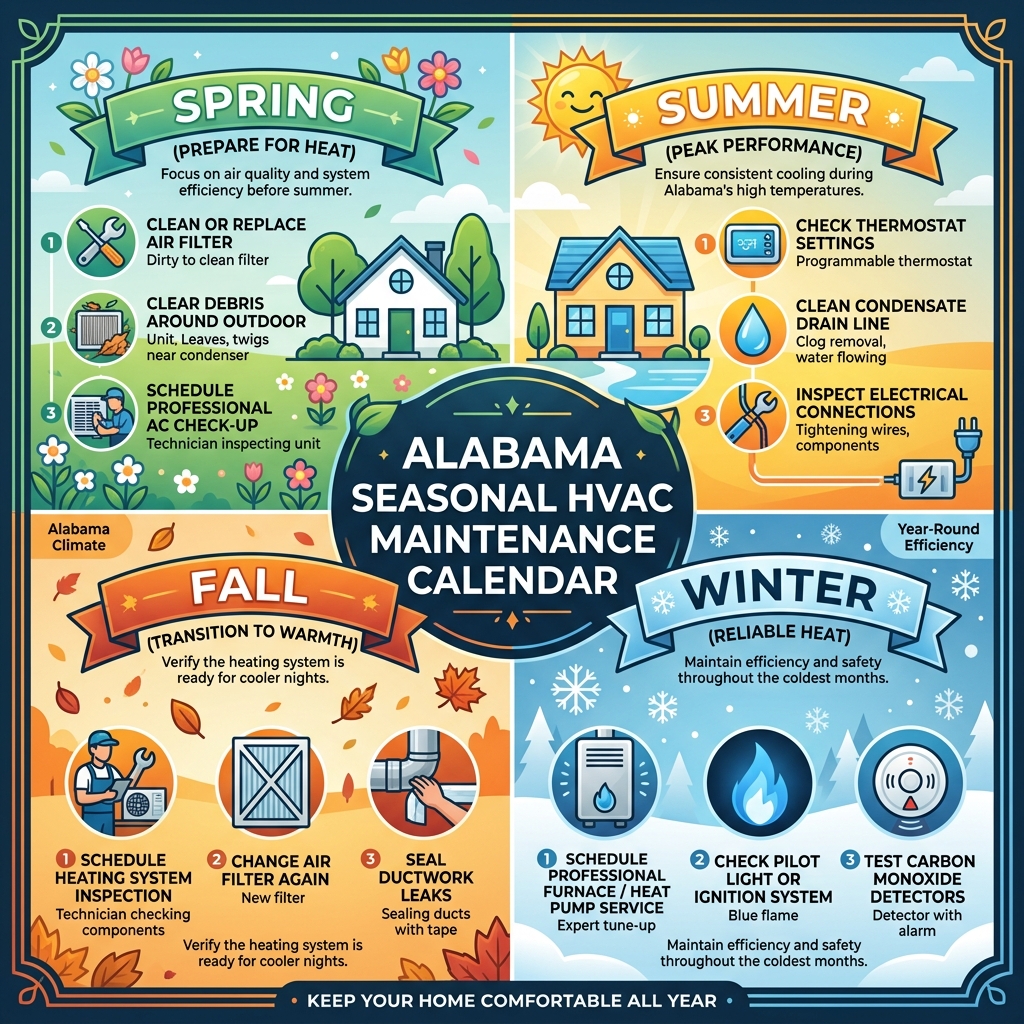
June: Full Summer Mode and Humidity Management
June marks the beginning of Birmingham's true summer assault on your HVAC system. Average highs climb into the low to mid 90s, and the humidity locks in at levels that make the heat index feel 10 to 15 degrees hotter than the actual temperature. Your AC system is now running 12 to 16 hours per day, and humidity management becomes just as important as temperature control. The key to humidity control in a Birmingham home starts with your thermostat's fan setting. Keep it on AUTO, never ON. When set to ON, the fan runs continuously, even between cooling cycles. During these fan-only periods, moisture that condensed on the evaporator coil gets blown back into your home before it can drain away, raising indoor humidity levels. On AUTO, the fan stops between cycles, allowing condensate to drip off the coil and drain out of the house. If your indoor humidity consistently exceeds 55 percent despite the AC running properly, you may need a whole-home dehumidifier. In Birmingham, where outdoor humidity routinely reaches 80 to 85 percent, even a properly sized AC system can struggle to maintain ideal indoor humidity levels. A whole-home dehumidifier works alongside your AC. It dramatically improves comfort and prevents the mold growth that thrives in Birmingham's moisture-heavy air. Ask for a written estimate before installation — pricing varies by home size and system integration.
July and August: Peak Stress Season for Birmingham AC Systems
July and August are the peak stress months for every air conditioning system in the Birmingham metro. Temperatures regularly exceed 95 degrees, the heat index pushes past 105, and your AC is running at maximum capacity for the majority of every 24-hour period. This is when component failures are most common and when HVAC companies are busiest. Replace your air filter at the beginning of each month without fail. A clogged filter during peak heat is the quickest path to a frozen coil and an emergency service call. Inspect your outdoor unit every two weeks for debris accumulation, especially after storms. Birmingham's summer thunderstorms can deposit leaves, branches, and other debris around and inside the condensing unit. After any severe storm, visually inspect the unit before running the system. Check your condensate drain monthly by verifying that water is dripping from the drain line exit point while the system is running. If the drip stops, pour bleach into the access point or call for service before the drain pan overflows. Monitor your cooling performance. If you notice the system running continuously without reaching the set temperature, or if rooms that previously cooled well are now warm, these are early warning signs of developing problems. Addressing them now, before a complete failure, is faster, cheaper, and less miserable than waiting for a midnight breakdown during the hottest week of the year.
Key Takeaway
July and August are when Birmingham AC systems fail most. Your system has been running at max capacity for months. If it starts running nonstop without reaching temperature, or rooms that used to be cool aren't anymore — act right away. Catching a problem early can be the difference between a minor repair and a full compressor replacement.
September: Do Not Let Your Guard Down in Birmingham
September tricks many Birmingham homeowners into thinking summer is over. It is not. Birmingham regularly sees temperatures in the upper 80s and low 90s through the end of September, and the humidity remains significant. Your AC has been running hard for five straight months at this point, and components that were marginal in June may be on the verge of failure now. Continue your monthly filter replacement and condensate drain maintenance through September. This is actually one of the highest-risk months for component failure because everything in your system has accumulated five months of continuous summer wear. A capacitor that was weakening in June has had three more months of thermal stress. A fan motor bearing that was starting to wear has logged hundreds of additional operating hours. Keep running the system and monitoring its performance until outdoor temperatures consistently stay below 80 degrees, which in Birmingham typically does not happen until mid to late October. When you do finally transition out of cooling season, consider scheduling a fall inspection. This end-of-season checkup catches problems that developed during summer, allowing you to address them during the slower fall season rather than discovering them when you first need the system next spring.
How Do You Prevent Mold in Birmingham HVAC Systems?
Mold is a persistent enemy of HVAC systems in Birmingham, and the city's climate creates near-perfect conditions for its growth. The combination of warm temperatures, abundant moisture from condensation, and organic material like dust and pollen provides everything mold needs to colonize your evaporator coil, drain pan, ductwork, and air handler. Preventing mold starts with moisture control. Keep your condensate drain line clear with monthly bleach treatments. Ensure the drain pan under your evaporator coil is clean and draining properly, not holding standing water where mold can establish. Have your evaporator coil professionally cleaned during your annual maintenance visit. A dirty coil provides both the moisture and the organic material that mold needs to grow. Consider having your ductwork inspected if you notice a persistent musty smell when the system runs. Older Birmingham homes with original ductwork in unconditioned attics are especially susceptible to condensation on duct surfaces, which promotes mold growth on both the inside and outside of the ducts. Installing UV-C germicidal lights inside your air handler is one of the most effective mold prevention strategies available. These lights kill mold, bacteria, and other biological contaminants as air passes through the system. The UV bulbs typically last 12 to 24 months. For a city with Birmingham's humidity levels, this investment pays back in improved air quality and reduced coil cleaning costs. Ask any installer for a written estimate before committing.
What Does Prevention Cost Versus Emergency Repair in Birmingham?
The economics of HVAC maintenance in Birmingham are straightforward and dramatically favor prevention. Annual preventive maintenance — tune-up visit, monthly filters, and monthly drain bleach treatments — is a small recurring cost compared to what emergency failures bring. Emergency repairs such as capacitor replacement, refrigerant recharge, or fan motor replacement cost meaningfully more than a scheduled spring visit. Major component failures like compressors, and full system replacements after years of deferred maintenance, cost many multiples more. Beyond the direct repair costs, consider the indirect costs of an emergency breakdown: the discomfort and potential health risk of enduring Birmingham's extreme heat and humidity without cooling, potential hotel costs if the home becomes uninhabitable, lost time from work to meet the repair technician, and possible water damage from a clogged drain line that overflowed. Industry sources such as the U.S. Department of Energy report that regular maintenance reduces breakdown frequency and extends system lifespan. In Birmingham's demanding climate, where systems work harder than the national average, those benefits translate to substantial savings over the life of the equipment. For any specific work, request a written estimate from the contractor before scheduling.
What Are the Best Thermostat Settings for Birmingham's Climate?
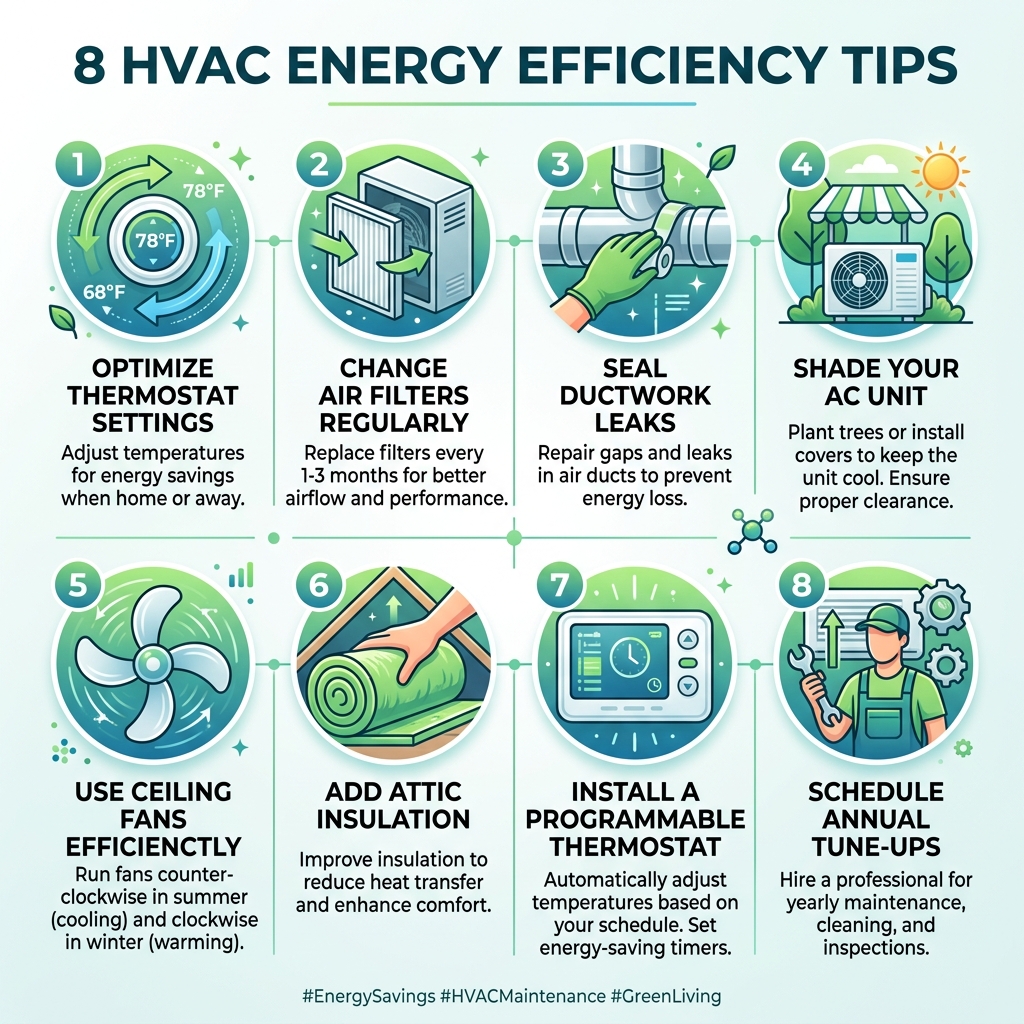
Finding the right thermostat settings for a Birmingham home requires balancing comfort, energy costs, and system longevity. The Department of Energy recommends 78 degrees as the baseline, and for Birmingham's humid climate, this is a sound starting point. When you are home during the day, set the thermostat between 75 and 78 degrees. Most Birmingham residents find 76 or 77 comfortable when combined with ceiling fans. When you leave for work or an extended period, raise the setting to 80 to 82 degrees rather than turning the system off entirely. Turning the AC off and letting the house heat up to 90 or higher means the system must work at maximum capacity for hours to recover, which is harder on components than maintaining a moderate temperature throughout the day. At night, 74 to 76 degrees provides comfortable sleeping conditions for most people. If you have a programmable thermostat, set it to begin cooling the house half an hour before you typically arrive home and to raise the temperature half an hour after you leave. One critical setting that many Birmingham homeowners overlook is the temperature differential between the thermostat setting and the outdoor temperature. Most residential AC systems are designed to maintain a 15 to 20 degree differential. On a 98-degree Birmingham day, setting the thermostat to 72 asks the system to maintain a 26-degree differential, which exceeds its design capacity. The system will run continuously without ever reaching the set temperature, wasting energy and accelerating wear without improving comfort.
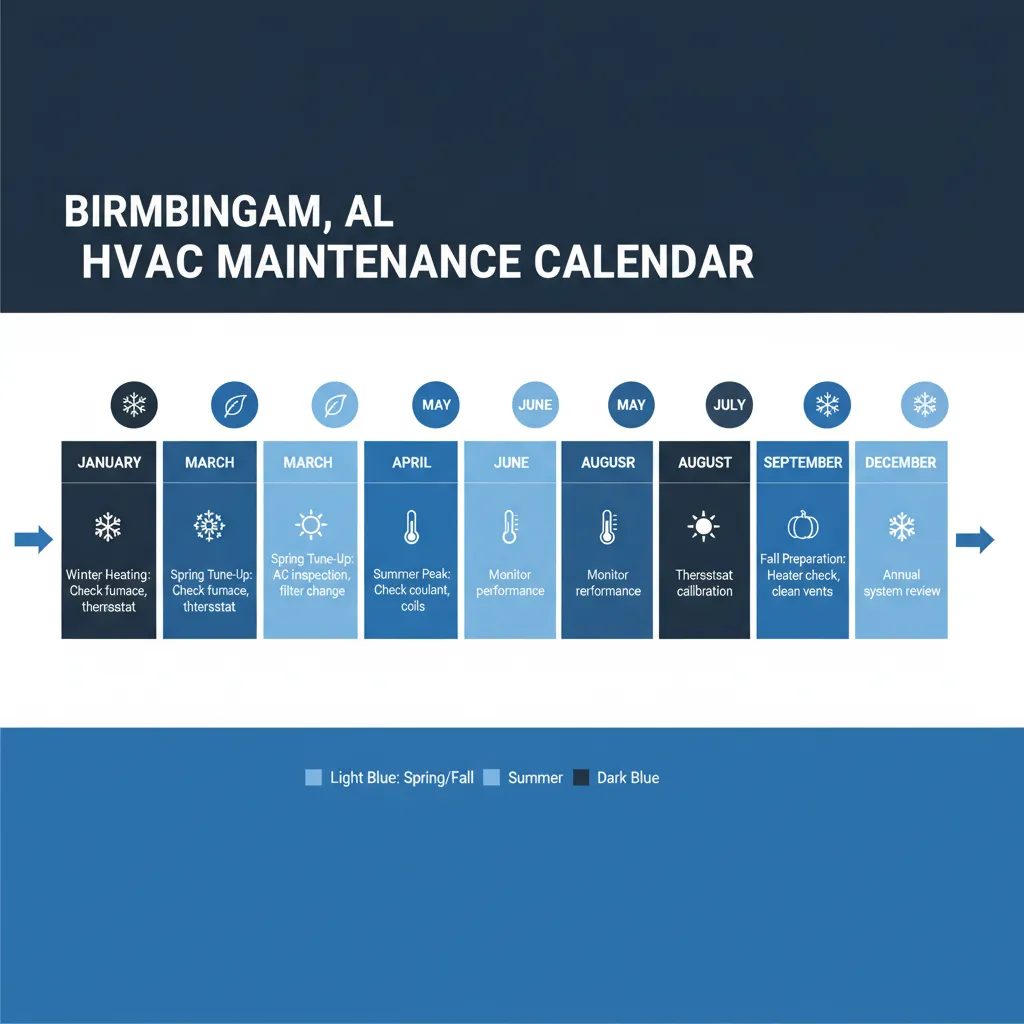
Share this infographic — afterhourshvacr.com
Ready to Prepare Your Birmingham Home for Summer?
Schedule your spring tune-up now while appointments are available. Or call after hours when other shops have gone home.
call CALL NOW (205) 994-6402Schedule spring maintenance early | Ask for a written estimate before any work begins
Download Our Birmingham HVAC Homeowner Guide
Seasonal checklists, troubleshooting steps, and maintenance schedules built for Alabama's climate. Written by licensed HVAC technicians.
call Call (205) 994-6402Sources & Citations
EPA — Indoor Air Quality — Federal standards for indoor environmental quality and HVAC systems
U.S. Department of Energy — Air Conditioning — Energy efficiency standards and maintenance guidance
ASHRAE — American Society of Heating, Refrigerating and Air-Conditioning Engineers technical standards
ENERGY STAR — Heating & Cooling — Certified equipment ratings and efficiency benchmarks
NATE — North American Technician Excellence — HVAC technician certification standards
Alabama Board of Heating, Air Conditioning & Refrigeration Contractors — State licensing authority
About the After Hours HVACR Editorial Team
Our content is written and reviewed by Alabama-licensed HVAC technicians with NATE certification and EPA 608 Universal credentials. The After Hours HVACR team has decades of combined field experience diagnosing and repairing residential and commercial systems across Hoover, Vestavia Hills, Pelham, Homewood, and Mountain Brook. Every article reflects real-world troubleshooting knowledge from Birmingham's unique climate — not recycled advice from a national template.
Read Next
Keep going. These pair well with what you just read.
High Humidity HVAC Problems Birmingham AL
Why Birmingham summer humidity makes a healthy AC feel broken.
DUCTWORKDuct Cleaning Birmingham AL — Is It Worth It?
When duct cleaning helps, when it does not, and what scams to avoid.
MAINTENANCEHVAC Maintenance Checklist Birmingham
The seasonal checklist to keep an Alabama system out of emergency mode.
Related Resources for Birmingham Homeowners
How Much Does Emergency AC Repair Cost in Birmingham?
Complete 2026 pricing guide for common AC repairs.
AC Blowing Warm Air? What to Check First
5 troubleshooting steps before calling for emergency service.
After Hours HVACR Emergency Services
After-hours AC repair across Birmingham. Ask for a written estimate before any work begins.
Birmingham AC Repair Service Area
Serving all of Birmingham and 8 surrounding metro cities.