Emergency AC Repair: What to Do When Your AC Dies at 2AM
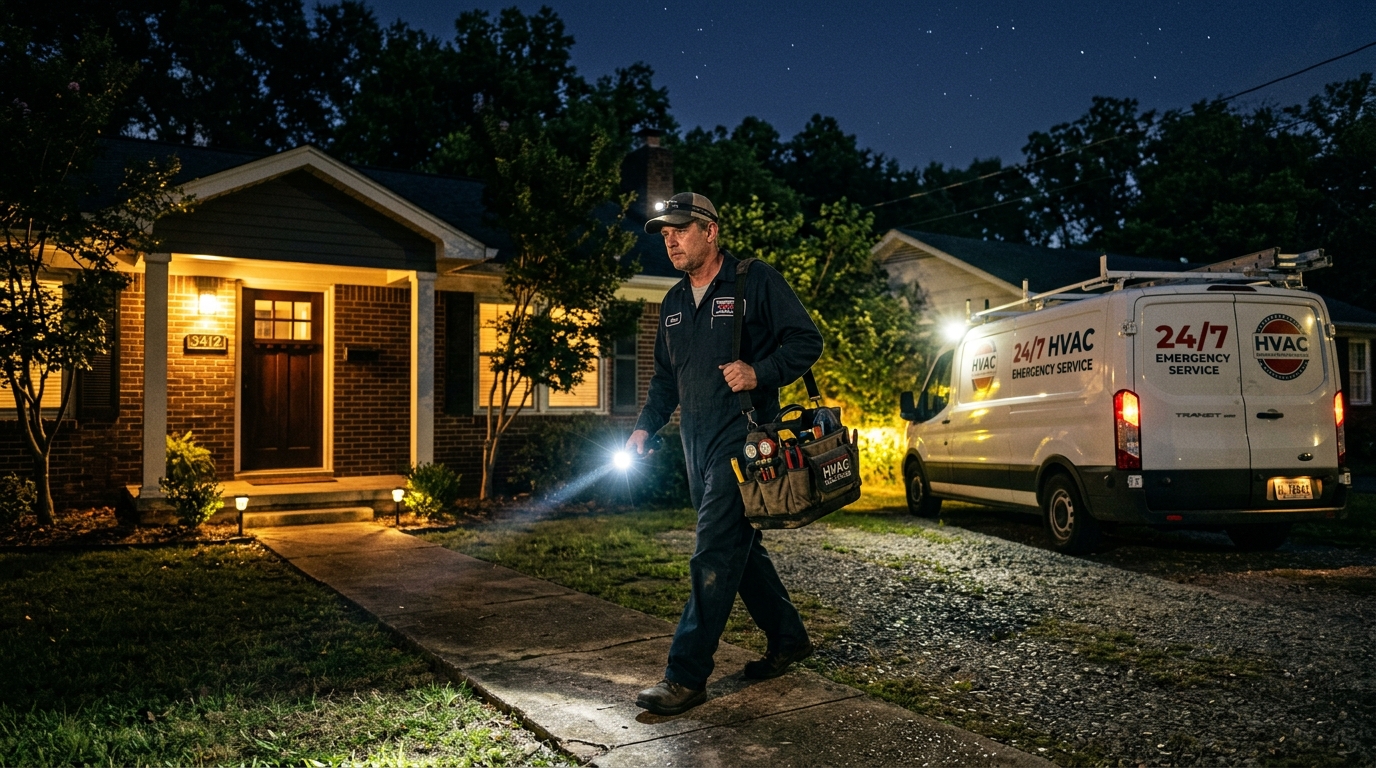
It's midnight. The house is 82 degrees and climbing. Everyone's awake. Your AC is dead. This is the guide for right now — what to check yourself before you call, how to manage the heat while you wait, and what to expect when the tech arrives.
Quick Answer
Before you call: check the thermostat settings, reset tripped breakers (once only), and check the air filter. If anyone in the home is elderly, very young, or has health conditions and the house is above 85 degrees, call immediately. While waiting: move to the lowest floor, turn the system off, and use fans with ice.
If you're dealing with an emergency right now, call us first. Read the article after.
call (205) 994-6402 — Available Now1. What to Check Before You Call
Some AC "failures" aren't equipment failures — they're settings or simple issues you can resolve yourself. Work through these quickly before calling:
Confirm it's set to COOL, fan set to AUTO, and the temperature setpoint is below the current room temperature. Someone may have changed the mode or the batteries may have died. Sounds obvious, but we get calls for this.
The AC system has two breakers — one for the indoor air handler (usually 15-30 amp) and one for the outdoor condensing unit (usually 40-60 amp). Go to the breaker panel and look for any breakers in the off position or in the middle (tripped) position. Reset any tripped breakers once. If they trip again immediately, don't reset them — that signals a real electrical problem.
A severely clogged filter can cause the system to shut down on high-temperature safety limit. Check it — if it's dark gray or black with debris, pull it out and run the system without a filter temporarily just to see if it runs. A dirty filter won't explain a completely dead system, but it can explain a system running but not cooling.
Go outside and look at the outdoor unit. Is the fan spinning? Do you hear the compressor running (a low hum)? Is the unit covered in ice? Is there obvious physical damage? This information is valuable for diagnosing over the phone and helps the tech prepare before arriving.
Did the power flicker or go out earlier? Power surges can trip safety controls inside HVAC equipment that require manual reset — not just the breaker. The reset button is typically on the outdoor unit or inside the air handler. Check your owner's manual if you have it.
If none of these reveal an obvious fix, call. You've already done the useful diagnostic steps a homeowner can do.
2. When to Call Right Now (Don't Wait)
Some situations warrant an immediate call without working through the checklist:
- Anyone in the home is elderly, very young, has heart disease, respiratory conditions, or medications that affect heat tolerance
- The temperature in the house has already climbed above 85-90 degrees
- It's a peak summer night and outdoor temperatures will stay above 80 all night
- You smell burning — electrical burning means turn off the breaker and call immediately
- There's water actively leaking from the air handler into the ceiling or walls
Heat illness is a real risk in Alabama summers. Don't be stubborn about waiting until morning for vulnerable household members.
Key Takeaway
If you smell burning or electrical odors, turn off the breaker immediately and call. If anyone in the home is medically vulnerable and the house is above 85 degrees, don't wait — call now and consider relocating while the tech is on the way.
3. What to Do While Waiting for the Tech
The hour or two between calling and arrival is the hard part. Here's how to manage it:
Move to the lowest floor
Heat rises. The first floor, and especially a basement if you have one, will be significantly cooler than upper floors. Set up in the coolest space available and keep people there.
Turn off the AC system
Turn the thermostat to OFF rather than leaving it running and trying to cool. A struggling system that's failing can cause additional damage if it keeps cycling. The tech will evaluate it fresh.
Manage windows strategically
Open windows only if outdoor temperature has dropped below indoor temperature — this is usually true after midnight, especially in fall and spring. In peak summer at midnight, outdoor temps may still be 80+ degrees, in which case opening windows makes things worse. Check the outdoor temperature before opening up.
Fans and ice
A box fan pointed at a large bowl of ice creates a surprising amount of cooling effect — more than the fan alone. If you have portable fans, deploy them with ice if available. Keep fans blowing across people, not just circulating hot air.
Stay hydrated
Drink water. Avoid alcohol and caffeine, which are diuretics. Cool (not ice cold) water is most effective for hydration.
Know when to leave
If you have vulnerable people in the home — elderly, infants, people with medical conditions — and the house is already above 85 degrees with several hours until the tech arrives, go somewhere cooler. A hotel, a family member's house, or even a 24-hour store. The tech can call you when they're close and you can return for the repair. There's no award for staying in a hot house.
Key Takeaway
Turn the system OFF while waiting for the tech. A struggling AC that keeps cycling can cause compressor damage or electrical issues that turn a moderate repair into a major one. Let the technician evaluate it fresh.
AC emergency right now? We answer the phone at 2AM.
Call (205) 994-64024. What to Tell the Technician When You Call
The more useful information you can provide, the faster the diagnosis goes. Have this ready:
- Your address and any access or gate information
- Make and model of your HVAC system (usually on a label on the outdoor unit)
- Age of the system if you know it
- What symptoms you're seeing — not cooling, making unusual noises, breaker tripping, water leaking
- When it started
- Whether anything happened before it failed — power outage, storm, recent service
- Whether anything you can see looks unusual — outdoor unit not running, ice on lines, water on floor
- Whether anyone in the home has medical conditions that make heat urgent
5. What to Expect When the Tech Arrives
Here's the honest version of what a legitimate emergency service call looks like:
The technician will do a full diagnostic before quoting any repair. This means checking voltages, measuring refrigerant pressures, testing components, and understanding the full picture before recommending a fix. This should take 20-45 minutes. If someone shows up and tries to sell you a repair after 5 minutes of looking around, be cautious.
A good tech will tell you exactly what they found, what it means, what it will cost to fix, and whether the repair makes sense given the age and condition of the system. They'll give you a firm price before starting any work.
Most common repairs — capacitor replacement, contactor replacement, refrigerant recharge — can be completed the same visit when parts are on the truck. Parts for less common failures may need to be ordered, in which case you may be without AC for another day. Ask directly if parts are on the truck.
6. After the Repair: Preventing the Next Emergency
Once you're cool again and the adrenaline has worn off, have a real conversation with the technician about what caused the failure and what the system's overall condition is. Ask:
- Was this failure preventable with maintenance?
- Are there other components showing signs of degradation?
- What's the overall condition of the system — is it worth continued investment?
- When should I schedule my next maintenance visit?
Most overnight emergency calls could have been prevented with a spring maintenance visit that caught degrading components. A capacitor failing in July was usually already weakening in April. An annual maintenance visit in spring is significantly cheaper than even a single emergency call — and far less stressful.
See our HVAC maintenance page to schedule before next summer. We'd rather see you then than at midnight again.
If you're in north Birmingham — Gardendale, Fultondale, Adamsville — Lockwell HVAC handles routine maintenance and tune-ups in that corridor and can catch the small issues before they become midnight emergencies.
FAQ: Emergency AC Repair
What should I check first when my AC dies at night?
Thermostat settings, circuit breakers, air filter, and whether the outdoor unit is running. If all of these check out and the system still isn't cooling, call for service.
Is a 2AM AC failure really an emergency?
In Alabama summer, yes — especially for vulnerable household members. Indoor temps climb fast in a sealed house at night. For healthy adults on a mild night, it's uncomfortable but not dangerous. Don't wait for vulnerable people.
What can I do to stay cool while waiting?
Lowest floor of the house, fans with ice bowls, open windows only if it's cooler outside than inside, stay hydrated. For vulnerable people, consider leaving for somewhere with AC.
Should I try to fix it myself at 2AM?
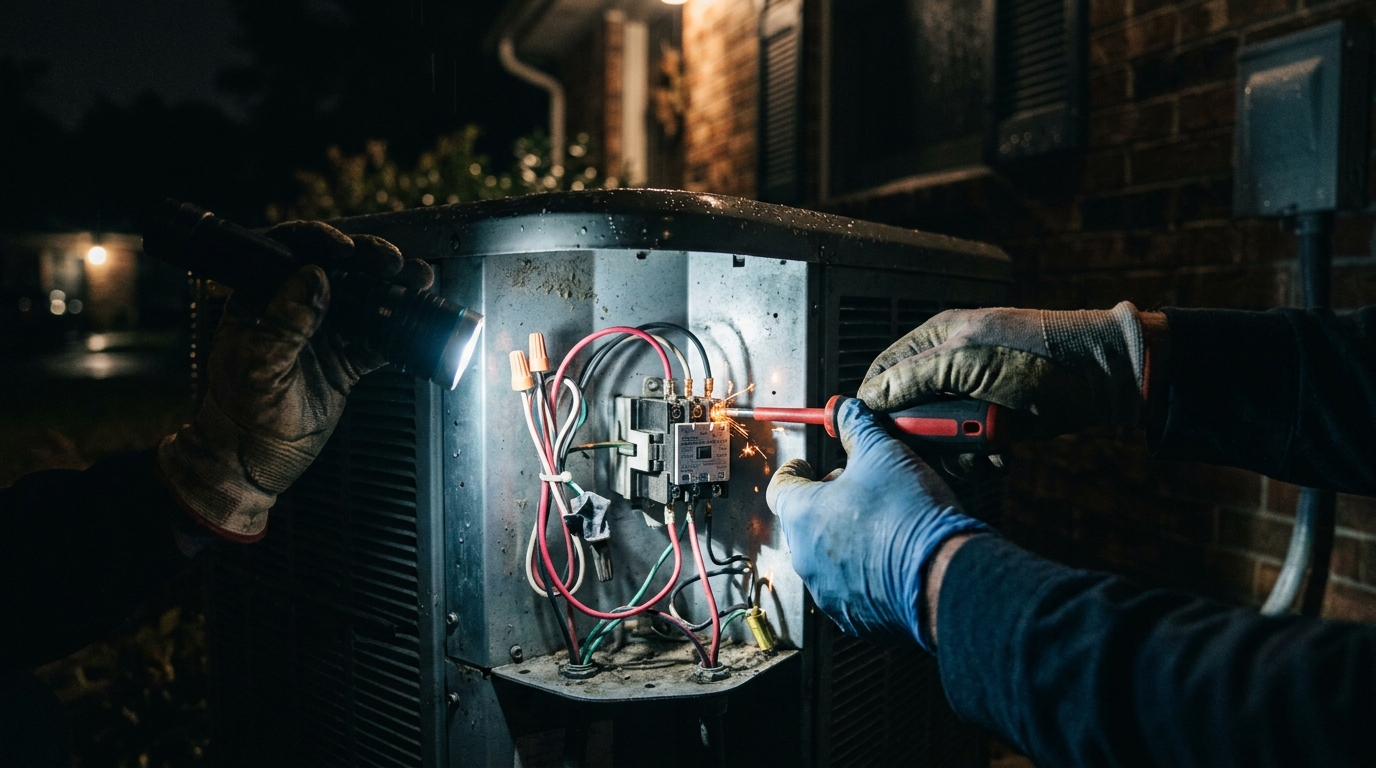
Check the basics — breakers, thermostat, filter, outdoor unit. Don't touch electrical components, refrigerant, or anything inside the units. The risk of injury or additional equipment damage isn't worth it.
How do I prevent this happening again?
Annual maintenance in spring. Most emergency failures show precursor symptoms that a technician catches during a maintenance visit. A failing capacitor found in April during maintenance is a scheduled daytime repair. The same capacitor failing in July at midnight is an emergency call plus whatever damage continued operation caused. Schedule maintenance every spring.
Download Our Birmingham HVAC Homeowner Guide
Seasonal checklists, troubleshooting steps, and maintenance schedules built for Alabama's climate. Written by licensed HVAC technicians.
call Call (205) 994-6402Sources & Citations
EPA — Indoor Air Quality — Federal standards for indoor environmental quality and HVAC systems
U.S. Department of Energy — Air Conditioning — Energy efficiency standards and maintenance guidance
ASHRAE — American Society of Heating, Refrigerating and Air-Conditioning Engineers technical standards
ENERGY STAR — Heating & Cooling — Certified equipment ratings and efficiency benchmarks
NATE — North American Technician Excellence — HVAC technician certification standards
Alabama Board of Heating, Air Conditioning & Refrigeration Contractors — State licensing authority
About the After Hours HVACR Editorial Team
Our content is written and reviewed by Alabama-licensed HVAC technicians with NATE certification and EPA 608 Universal credentials. The After Hours HVACR team has decades of combined field experience diagnosing and repairing residential and commercial systems across Hoover, Vestavia Hills, Pelham, Homewood, and Mountain Brook. Every article reflects real-world troubleshooting knowledge from Birmingham's unique climate — not recycled advice from a national template.
Read Next
Keep going. These pair well with what you just read.
Emergency AC Repair Cost Birmingham AL 2026
A 2026 cost framework so you know what reasonable looks like.
AC REPAIRAC Freezing Up in Birmingham AL? Causes & Fixes
Ice on the indoor coil means a cause — not a fluke. Diagnose it right.
REPAIR VS REPLACEAC Repair or Replace? Cost Guide Birmingham AL
When repair costs cross the line into a replacement decision.