Why Your Energy Bill Is So High (And How Your HVAC Is to Blame)
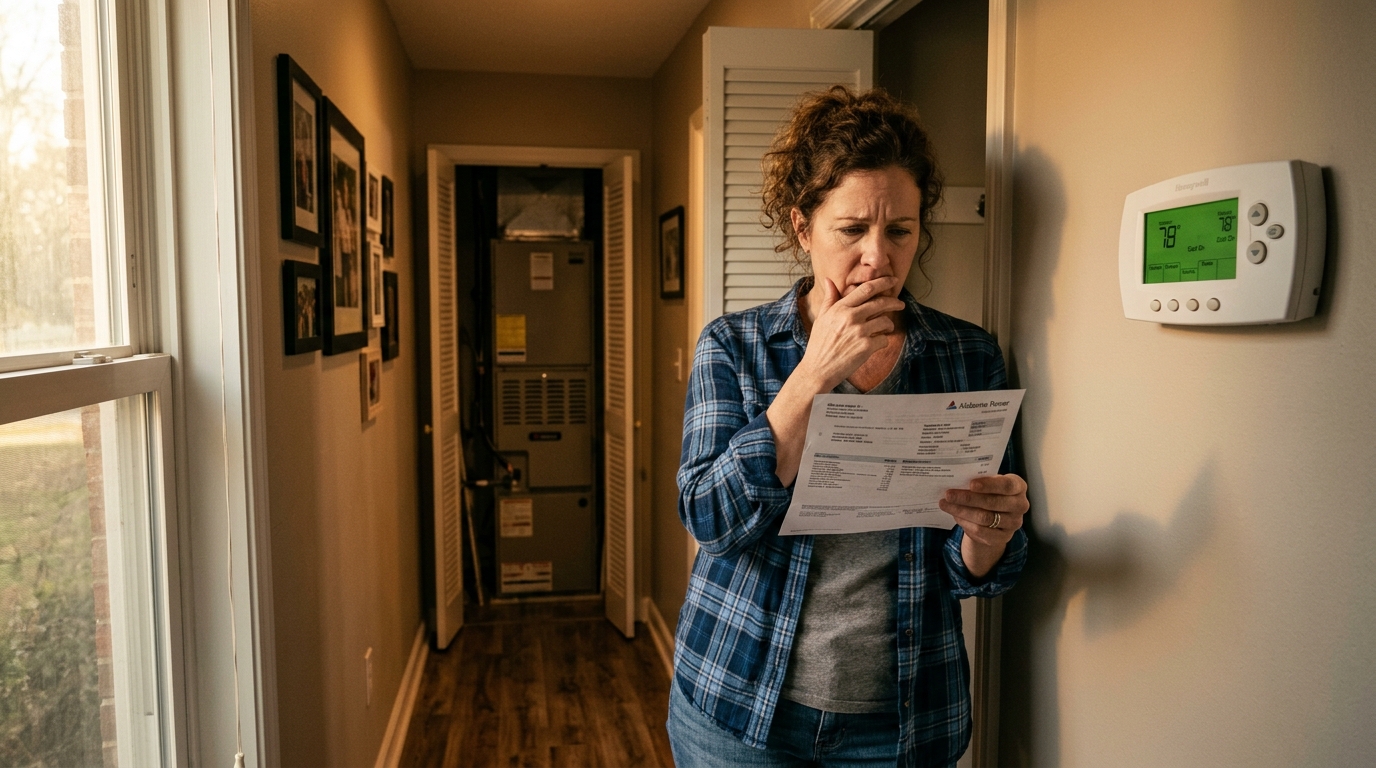
Your Alabama Power bill in July is painful. Some of that is just Alabama summers — it's hot and the AC has to run. But a bigger-than-expected bill is often your HVAC system telling you something is wrong. Here are the specific HVAC problems that drive up Birmingham energy bills, ranked by how much they typically cost you.
Quick Answer
Your HVAC accounts for 50-70% of your summer electricity bill in Birmingham. The top energy wasters: dirty condenser coils (10-30% efficiency loss), refrigerant leaks, duct leaks losing 20-30% of cooled air into the attic, and aging equipment running well below its rated efficiency.
1. Dirty Condenser Coil — The Most Common Culprit
The outdoor condensing unit has a coil that rejects heat from your home to the outside air. When that coil is coated with dirt, pollen, cottonwood, and debris — which happens fast in Birmingham — it can't reject heat as efficiently. The compressor has to work harder and run longer to achieve the same cooling effect.
Research on coil fouling shows energy consumption increases of 10-30% with even moderate coil contamination. In a Birmingham home where the AC runs from May through October, a 15% efficiency loss adds up to real money over a cooling season.
The fix is annual professional coil cleaning in spring. Not a garden hose rinse — actual cleaning with coil cleaner that penetrates the fin pack and removes bonded contamination. This single maintenance task probably delivers more energy savings per dollar than anything else you can do to your HVAC system.
Check your outdoor unit. If you can see visible debris embedded in the fins, or if it's gray rather than the silver color of clean aluminum, the coil needs cleaning.
2. Low Refrigerant from a Leak
Refrigerant is what actually moves heat in your system. When the refrigerant charge is low due to a leak, the system's ability to absorb heat from indoor air is reduced. The compressor runs longer trying to compensate. Energy use goes up while comfort goes down.
Refrigerant leaks are slow — often so slow that the system appears to be working while gradually losing capacity over months. You might notice the house takes longer to cool down. Your energy bill creeps up. The system runs more at night when it used to cycle off. These are all signs of declining refrigerant charge.
A refrigerant check during spring maintenance catches this. If the system is low, we find the leak, repair it, and recharge. Simply adding refrigerant without fixing the leak is a temporary patch — it will be low again within months.
Key Takeaway
Refrigerant leaks are sneaky — your system keeps running but gets progressively less efficient over months. If your house takes longer to cool down than it used to, a slow refrigerant leak is one of the first things to check.
3. Leaky Ductwork — Often Overlooked
The EPA estimates that the average home loses 20-30% of conditioned air through duct leaks. In Birmingham homes with ductwork in the attic — which is most of them — this is an especially big deal.
In July, your attic temperature can hit 130-150 degrees. If your supply ducts are leaking in that attic, you're pumping expensively cooled 55-degree air directly into a 140-degree space. That air is gone — not cooling your living space, not providing comfort, just heating up and escaping. Your AC then has to run even more to make up for what it's losing.
Duct leaks also cause return air problems. If return ducts leak, they can pull hot attic air or unconditioned crawlspace air into the return stream, making the system work against itself.
Signs of significant duct leaks: rooms that are always harder to cool or heat than others, unusually high energy bills with no other explanation, visible dust streaks on walls or ceilings near registers, or an HVAC system that seems undersized for its square footage. Duct sealing is often one of the best investments a Birmingham homeowner can make.
Energy bills climbing? A diagnostic visit pinpoints exactly where the waste is.
Call (205) 994-6402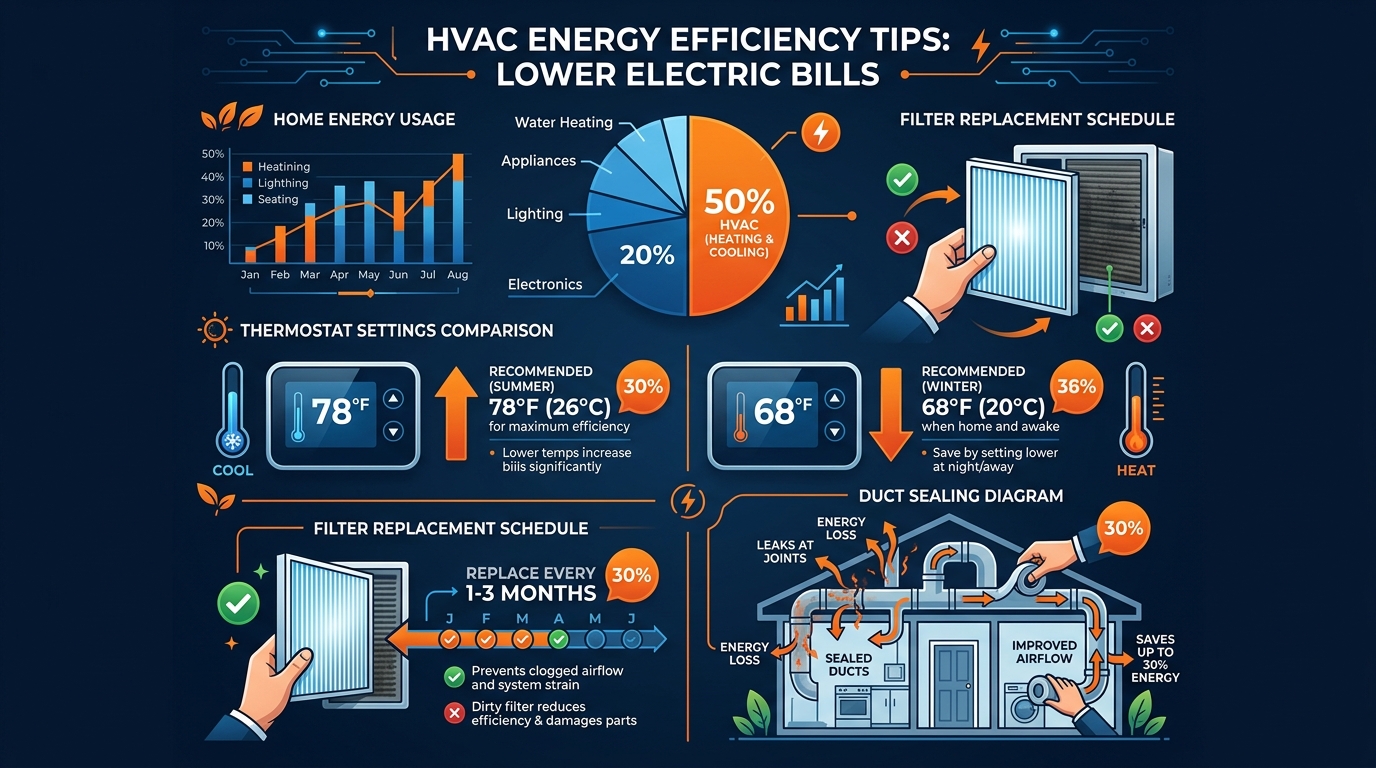
4. Aging, Inefficient Equipment
HVAC efficiency is measured in SEER (Seasonal Energy Efficiency Ratio). The minimum federal standard when many Hoover, Vestavia Hills, and Homewood homes were built in the 1990s was 10 SEER. Current minimum is 14-15 SEER depending on region, and modern systems go up to 20+ SEER.
A 10 SEER system uses about 43% more energy than a 16 SEER system to move the same amount of heat. In Birmingham where the AC runs heavily for 5-7 months per year, that efficiency gap means significantly higher bills every year the old equipment stays.
Beyond the SEER rating, aging systems develop internal wear that degrades performance below their nameplate rating. A 20-year-old 10 SEER system is probably performing at 7-8 SEER or worse due to compressor wear, coil fouling, and refrigerant loss.
If your system is 15+ years old and your energy bills have been climbing, the system itself is likely contributing to those bills. A replacement analysis comparing projected operating cost savings against equipment cost often shows replacement making financial sense sooner than homeowners expect.
5. Thermostat Settings and Behavior
Not everything is an equipment problem. Thermostat settings and usage patterns have a significant impact on energy consumption:
- Setting the thermostat too low. Every degree lower means roughly 3-5% more energy consumption. Setting 70 instead of 76 on a 95-degree day isn't just demanding more cooling — it's forcing the system into continuous operation that it wasn't sized for in extreme heat.
- No setback when away. If the house is empty from 8am to 6pm but you're cooling it to 72 all day, you're paying for comfort nobody is experiencing. Setting back to 80 while away and precooling before you return saves meaningful energy.
- Fan set to ON instead of AUTO. With the fan set to ON, the air handler blower runs continuously even when the AC isn't cooling. This moves air but doesn't cool it, and it re-evaporates some of the moisture that just condensed on the coil — undermining dehumidification. AUTO setting lets the fan run only when cooling is active.
Key Takeaway
Three thermostat mistakes that silently inflate your bill: setting temp below 76 (each degree costs 3-5% more), cooling an empty house all day, and leaving the fan on ON instead of AUTO. Fix these before calling for service — they cost nothing to try.
6. Auxiliary Heat Running Too Much (Heat Pump Homes)
For Birmingham homes with heat pumps, unexpectedly high winter bills are often traced to auxiliary heat strips running more than they should.
Electric heat strips are 100% efficient — they convert electricity directly to heat. A heat pump in good condition is 200-350% efficient in mild weather — it delivers more heat energy than the electricity it consumes. When heat strips run instead of the heat pump cycle, you're consuming significantly more electricity.
Common causes of excessive auxiliary heat: low refrigerant charge (the heat pump can't deliver enough heat at its actual refrigerant level, so strips compensate), thermostat set to "emergency heat" accidentally, a defrost board keeping the system in defrost too long, or a failing reversing valve causing the system to not properly switch to heating mode.
If your heat pump home has electric bills in winter that are higher than expected, a refrigerant check and system diagnostic in fall is worth doing.
7. What to Do About High Energy Bills
Start by comparing your KWh usage on the bill — not just the dollar amount — to the same month last year. If usage is significantly higher and nothing obvious has changed in how you use your home, work through this list:
- Check and replace the air filter if it's dirty
- Look at the outdoor unit — does it have visible debris in the coil fins?
- Adjust thermostat settings — are you cooling lower than necessary?
- Check that fan is set to AUTO not ON
- When the system last had professional maintenance — if more than a year ago, schedule it
- Consider duct inspection if you have attic ductwork and bills are significantly high
- If the system is 15+ years old, get a replacement analysis done
Most energy bill problems have identifiable HVAC causes. A diagnostic call from a knowledgeable technician can usually identify what's driving consumption and put a dollar figure on the fix versus the ongoing cost of not fixing it.
High Energy Bills? Call for a Diagnostic
We'll identify what's driving up your Alabama Power bill and tell you exactly what it costs to fix it.
call (205) 994-6402FAQ: High Energy Bills and HVAC
How much of my energy bill is the HVAC?
In Birmingham during summer months, typically 50-70% of total electricity use is HVAC. In July and August, it can be higher. Any HVAC inefficiency shows up prominently in total bills because the system dominates usage.
Can a dirty coil really raise my bill?
Yes. Research shows dirty coils can increase energy consumption 10-30%. In Alabama where the AC runs for months, that's a significant dollar amount. Annual coil cleaning is the highest-return maintenance task for Birmingham homeowners.
Do duct leaks cause high energy bills?
Yes. The EPA estimates 20-30% of conditioned air is lost through duct leaks in typical homes. In homes with attic ductwork in Birmingham's 130-degree summer attics, this is a major energy drain. Duct sealing is one of the best efficiency investments available.
My bill is higher than last year but nothing seems different. Why?
First compare KWh, not just dollar amounts (rates change). If KWh are up, the most common culprits are a dirtier coil, lower refrigerant from a slow leak, or equipment that's aged another year. A spring maintenance visit usually identifies which one applies.
Is it worth replacing my old system to save on energy bills?
Often yes, especially for systems 15+ years old. The math depends on your current bill, the efficiency gap, and how long you'll stay in the home. Call us for a replacement analysis — we'll run the actual numbers for your situation.
Download Our Birmingham HVAC Homeowner Guide
Seasonal checklists, troubleshooting steps, and maintenance schedules built for Alabama's climate. Written by licensed HVAC technicians.
call Call (205) 994-6402Sources & Citations
EPA — Indoor Air Quality — Federal standards for indoor environmental quality and HVAC systems
U.S. Department of Energy — Air Conditioning — Energy efficiency standards and maintenance guidance
ASHRAE — American Society of Heating, Refrigerating and Air-Conditioning Engineers technical standards
ENERGY STAR — Heating & Cooling — Certified equipment ratings and efficiency benchmarks
NATE — North American Technician Excellence — HVAC technician certification standards
Alabama Board of Heating, Air Conditioning & Refrigeration Contractors — State licensing authority
About the After Hours HVACR Editorial Team
Our content is written and reviewed by Alabama-licensed HVAC technicians with NATE certification and EPA 608 Universal credentials. The After Hours HVACR team has decades of combined field experience diagnosing and repairing residential and commercial systems across Hoover, Vestavia Hills, Pelham, Homewood, and Mountain Brook. Every article reflects real-world troubleshooting knowledge from Birmingham's unique climate — not recycled advice from a national template.
Read Next
Keep going. These pair well with what you just read.
$5000 Rule for HVAC Birmingham AL
The repair-or-replace math every Birmingham homeowner should run before signing.
AC REPAIRAC Drain Line Clogged in Birmingham? Fix It Tonight
Why a clogged condensate line shuts the whole system down.
REPAIR VS REPLACEAC Repair or Replace? Cost Guide Birmingham AL
When repair costs cross the line into a replacement decision.