Storm Damage HVAC
After Alabama Throws Its Worst at Your Unit
The storm passed. Trees are down. The neighbor's trampoline ended up in your driveway. You walk around back and your outdoor AC unit has a branch through it, hail dents across the coil, or it just won't turn on anymore. Insurance is going to want photos, an honest assessment, and an itemized repair estimate. We do all three.
call CALL (205) 994-6402Written by John, lead Alabama HVAC tech. Updated for the 2026 Alabama storm season.
First Steps Right After the Storm
Before you call anyone, do these three things if it's safe. One: turn the system off at the indoor thermostat. Don't let it try to run damaged equipment. Two: if the outdoor unit is visibly damaged, turn off the outdoor disconnect (the gray box on the wall next to the condenser) and the breaker at your panel labeled AC or air handler. Three: take photos before you touch anything. Photos with timestamps that include the broader context — the fallen tree, the hailstones on the ground, the wet condensate — are what insurance adjusters trust.
Don't try to "test" the system to see if it still works. A nearby lightning strike can leave components silently damaged — the system may run for ten minutes and then take out the compressor permanently. A bent fan blade in a hail-struck unit will throw itself through the coil within hours of operation. Damaged refrigerant lines can leak the charge before you even notice. Wait for diagnosis.
If a tree or branch fell on the unit, do not try to lift it yourself. Larger limbs can shift suddenly and cause more damage — or hurt you. Wait for the tree service or for us to coordinate the lift. We've worked alongside Birmingham tree services enough times to know the choreography.
The Five Storm Damage Patterns We See in Birmingham
A direct strike is rare; near-strikes that send surge through the power lines are common in Alabama summers. The damage list usually includes the outdoor capacitor, the contactor, the control board in the air handler, the thermostat, and sometimes the compressor's start components. We meter every circuit before declaring anything good. Whole-house surge protection installed afterward is one of the smartest small-dollar upgrades a homeowner can make.
Birmingham hail seasons (spring and fall) leave dented condenser coils across the metro. Light damage we can comb out on site using proper fin combs — labor-only repair. Severe hail can flatten enough of the coil that airflow drops below operational thresholds; in those cases the coil itself needs replacement or the unit gets totaled by the insurance adjuster.
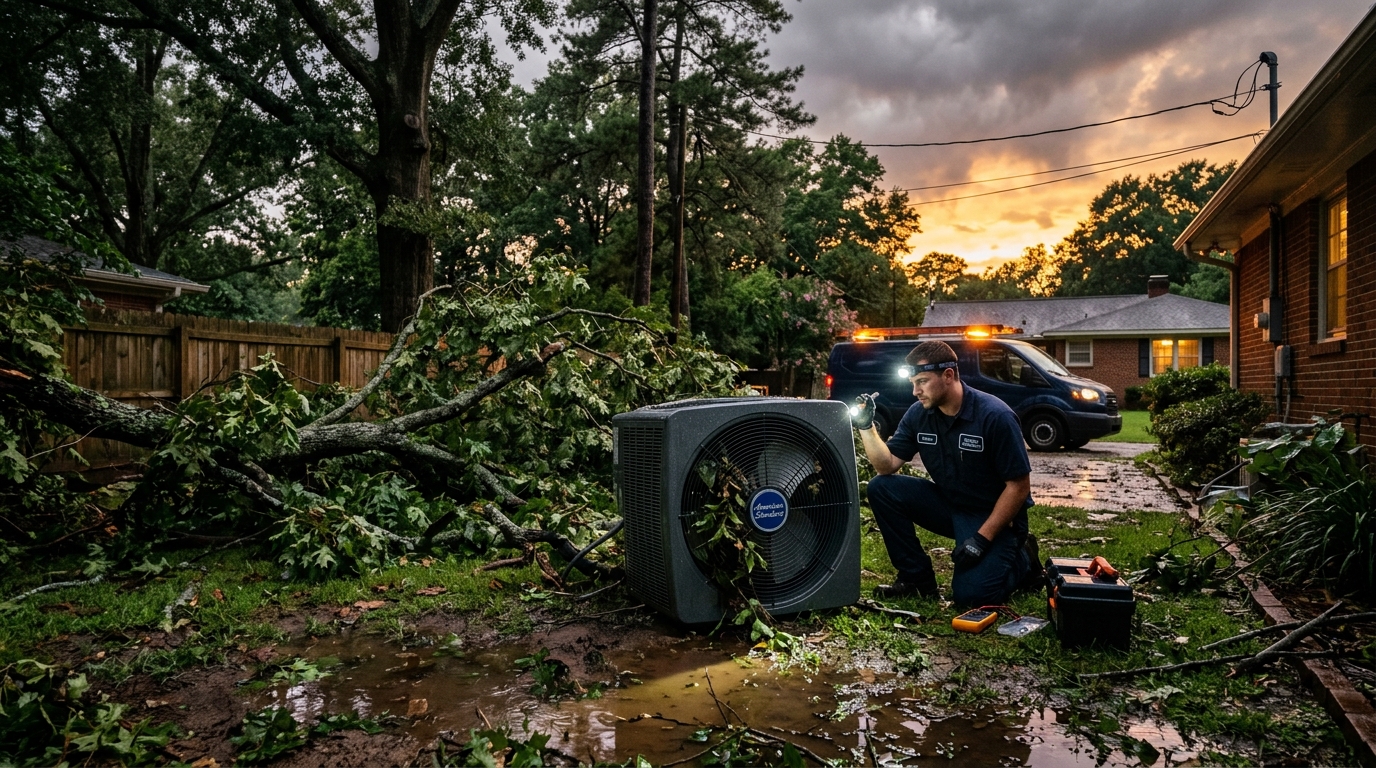
Direct impact almost always means a refrigerant line break, a bent or broken fan blade, and cosmetic cabinet damage that may or may not be repairable. We document everything, work with the tree service to lift the limb safely, and provide an honest read on repair-versus-replace once the unit is fully accessible.
Standing water from heavy rain or backed-up storm drains can fill an outdoor unit's base pan and corrode internal electrical components. If the unit was running while submerged, the compressor may have ingested water through a damaged seal. We diagnose, document, and replace contactors, capacitors, and disconnect components that show water intrusion.
High straight-line winds in Alabama severe weather can shift an outdoor unit on its pad. A shifted unit can crack the refrigerant lines at the service valve connections, throw the fan blade out of balance, and break the electrical conduit at the disconnect. Visual inspection misses most of this; we test pressures and verify alignment.
Even without major impact, severe weather drives leaves, pine needles, mulch, and small debris deep into the condenser coil. Left there, it restricts airflow and accelerates compressor wear all season. Coil cleaning after every major storm is one of the cheapest ways to extend a Birmingham AC's life.
What Our Post-Storm Visit Includes
Cabinet, fan blade, coil fins, refrigerant lines, disconnect, electrical conduit. Photographed for insurance.
Capacitor microfarad reading, contactor continuity, control voltage at the air handler, refrigerant pressures.
Written report listing every damaged component, photos, and an itemized repair estimate adjusters can verify.
Honest read on whether the unit can be repaired cost-effectively or whether replacement is the right call.
Insurance Claim Documentation
We don't file the claim for you — that's between you and your carrier. What we do is make the claim easy to file and hard to deny. After the inspection, you get a written assessment with each damaged component listed, a parts and labor estimate, photos of the damage, and a statement of the cause (lightning surge, hail impact, falling object, water intrusion). That's the package adjusters want.
If your adjuster wants to come look at the unit in person, we can be on site with you to walk through what we found. If they push back on the scope of damage, we provide the meter readings and pressure tests that support the diagnosis. Most claims go through clean when the documentation is solid the first time.
One word of caution: don't let an adjuster talk you into a repair that we don't recommend. We've seen units patched up after lightning damage that died two months later — and by then the claim was closed. If the right answer is replacement, we'll say so in writing.
Post-Storm Service — Birmingham Metro
After every major Alabama severe weather event we run extra trucks across the Birmingham metro to handle the storm-damage volume. Same dispatch number whether you're in Hoover, Vestavia, Homewood, Mountain Brook, Pelham, Helena, Alabaster, Trussville, or Birmingham proper. The day after a tornado warning is one of our biggest dispatch days of the year — we're built for it.
Related Services & Reading
Full diagnosis when the damage isn't storm-related.
Storm passed at the evening — we're still answering.
Sunday storms still get same-day dispatch.
If the storm totaled the unit, here's what comes next.
When power flickers turn into ice the next morning.
What's covered where after a damage event.
Storm Damage HVAC FAQ
How can I tell if a lightning strike damaged my HVAC?
Common signs include the system not turning on after a storm, breakers tripped that won't reset, scorch marks on the outdoor disconnect, melted thermostat or burnt smell at the air handler, and partial operation — the outdoor unit runs but the indoor doesn't, or vice versa. Even without obvious damage, a nearby strike can fry control boards, capacitors, and contactors through ground surge. We test the full electrical path before declaring the system fine.
What does hail do to an AC condenser?
Hail flattens the aluminum fins on the outdoor coil. Flattened fins block airflow across the coil, which causes the system to run higher head pressures, higher amp draw on the compressor, and progressive efficiency loss. Light hail damage can be combed back with proper fin combs. Heavy damage from larger hailstones may require a coil replacement and often qualifies for an insurance claim.
A tree branch hit my AC unit — what now?
Turn the system off at the indoor thermostat and the outdoor disconnect. Do not try to run it. Even small impacts can fracture refrigerant lines, bend the fan blade, or shift the compressor mounts internally. Take photos of the damage and the tree before you move anything — those photos matter for the insurance claim. Then call us. We'll assess whether the unit is repairable or a total loss and provide written documentation for your adjuster.
Will my homeowners insurance cover HVAC storm damage?
Most homeowners policies cover sudden accidental damage from storms, lightning, hail, and falling objects, but policy specifics vary widely. We provide written assessments, photo documentation, and itemized estimates that your adjuster can use. We don't handle the claim for you — but we give you everything you need to file a strong one.
Should I run my AC during a thunderstorm?
If you have a whole-house surge protector and a properly grounded system, running during storms is generally fine. If you don't, consider turning the system off at the thermostat (not just the breaker) during severe weather with active lightning. A surge protector at the panel and a dedicated surge arrestor at the outdoor disconnect together cost a small fraction of the damage a single near-strike can do.
Storm Passed and the AC Won't Turn On? Call.
Real Alabama tech. Insurance-ready documentation.
call (205) 994-6402